Ezekiel: A Prophet in Exile
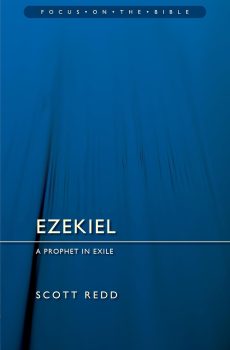 Scott Redd, Ezekiel: A Prophet in Exile. Focus on the Bible. Fearn, Scotland: Christian Focus, 2026. 288 pp. $19.99, paperback.
Scott Redd, Pastor of Briarwood Presbyterian Church (PCA) and Visiting Lecturer in Old Testament at Reformed Theological Seminary in Washington, D.C., is known to many readers for his contributions to Old Testament studies. This book serves as an outflow of many years of teaching the prophets, including the Book of Ezekiel.
This book, Ezekiel: A Prophet in Exile, is in the Focus on the Bible series, which is designed primarily for pastors and small group leaders, and at the end of each chapter, there are questions designed for discussion about the text. These questions serve as valuable pedagogical tools, particularly for study groups that want to gain a deeper understanding of the text.
Redd’s treatment of the book of Ezekiel combines both a detailed reading of the text in its ancient Near Eastern context and a distinct Christological perspective. This latter focus is seen in the various New Testament connections highlighted throughout each chapter, such as the reading of Gog and Magog in light of Revelation 20:7–10 (226). At the same time, Redd helpfully opens up discussions of historical context, such as the name of Daniel and its possible, but uncertain, links to an ancient Ugaritic story which mentions a certain “Dan’el” (93). Redd also makes many pastoral applications. For example, he observes, “The covenant community of Ezekiel’s time is much more similar to the covenant community today than we might first imagine” (255). Redd guides the reader from the text and context of Ezekiel to the Scriptures’ current application in light of Christ.
The book is divided into three main parts: “The Reality and Rationale for Judgment Against Jerusalem 1–24”; “Global Judgment of Israel’s Enemies Ezekiel 25:1–32:32”; and “Blessing and the Restoration of the Temple Ezekiel 33:1–48:35.” Part one further subdivides into two sections: “The Reality of Divine Absence from the Temple” (Ezekiel 1–7) and “The Rationale of Divine Absence from the Temple” (Ezekiel 8–24). In like manner, part three also subdivides into two sections: “Global Judgment and Restoration for Israel” (Ezekiel 33–39) and “The New Temple Order” (Ezekiel 40–48).
In the introduction, Redd presents the key theological themes and argues for traditional views on exilic dating and Ezekielian authorship by situating the prophet Ezekiel at the Chebar Canal in Babylon during the exile, where his prophecy foretells the fall of Jerusalem and its consequences (10). He also provides helpful charts for dating, including the Gregorian calendar and relative dating (15).
Part one, chapter one, examines the introduction to the book of Ezekiel (1:1–3), the divine chariot throne vision (1:4–28), and Ezekiel’s call (2:1–3:27). In chapter two of the book, Redd helps break down the four performances (4:1–5:4) of vision one (1:4–28). These performances include “Besieging the Brick” (4:1–3), “Lying on the Side” (4:4–8), “Rationing the Food” (4:9–17), and “Cutting and Burning the Hair” (5:1–4). Redd not only shows the structure but also clarifies for the reader the intent and meaning of these difficult performances by the prophet.
Section two of part one begins with the second vision (Ezekiel 8–11). Alongside a helpful structuring of the text, Redd highlights important thematic elements of the vision, commenting, for example, that “the vision, therefore, includes both justice and mercy, conviction and consolation, as a reminder to Ezekiel’s audience” (60). Redd serves the reader well in working through difficult imagery such as “The Faithless Bride” (Ezekiel 16:1–63).
Part two begins with the oracles against the nations. Redd clarifies the role and nature of these oracles, stating, “These oracles function as much to show God’s global reign and therefore global application of justice as they do to communicate divine deliverance for the people of God” (153). Such oracles often can be hard to preach, but Redd walks the reader through each nation’s section. As with the book of Ezekiel itself, Redd gives much attention to the oracle against Egypt in chapter 13.
Part three of this book focuses on the restoration themes of the Book of Ezekiel. Redd displays this restoration through the lens of the New Testament. For example, when discussing Ezekiel 34, Redd addresses John 10:1–18 in light of Ezekiel 34 to show Christ as the true Good Shepherd: “The appearance and ministry of Jesus Christ and His apostles give us a first glimpse of what true and full restoration might look like” (206).
This volume also serves as an introduction to other major commentaries, offering a brief overview of a number of key works. Notable among the commentaries on the book of Ezekiel are Moshe Greenberg’s in the Anchor Yale Bible series, Walther Zimmerli’s Hermeneia commentary, and Daniel Block’s in the New International Commentary of the Old Testament series. Redd’s work situates itself as a complement to these major commentaries, whether in terms of Block’s pastoral theological depth, Zimmerli’s foundational structure on holiness and glory, or Greenberg’s ancient Near Eastern understanding. If there is one small critique, it would be the lack of a final bibliography to bring together the sources referenced throughout the book, which would offer an additional, easily accessible starting place for further study for pastors and students.
I highly recommend Redd’s book. He displays a deep knowledge of the book of Ezekiel, its New Testament connections, and the context of the ancient Near East. This is an excellent resource on the Book of Ezekiel for preachers and teachers. As a friend and former student of Scott Redd, I continue to learn more from him about the Scriptures and specifically the book of Ezekiel.
Jason Nuwayhid, MDiv/MABS 2025
University of Edinburgh (Ph.D. candidate)